26 Sep 2026
Payment Timelines and Multi-Table Poker Access During Live Sports Events
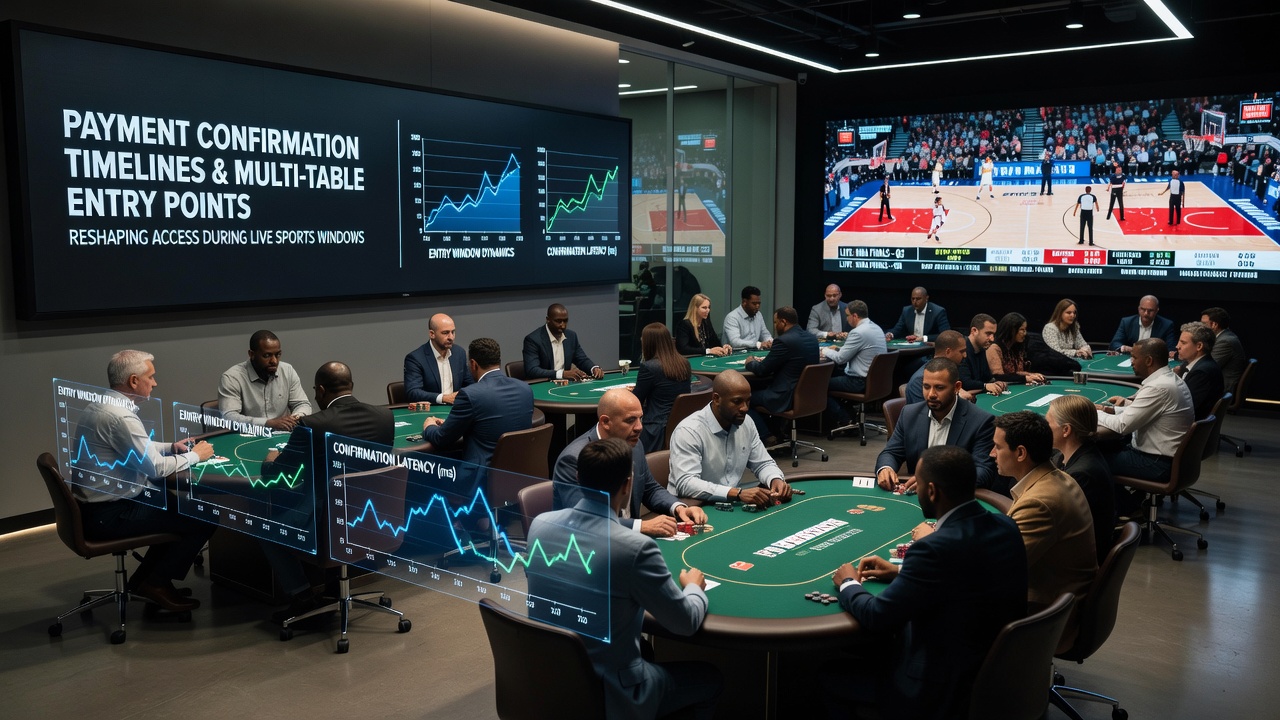 Payment confirmation timelines directly influence how players register for multiple poker tables when major sports events create overlapping demand spikes. Data from gaming operators shows that delays in transaction verification often limit the number of simultaneous entries a participant can complete before blinds rise or tables fill. Observers note that these windows compress most sharply during high-profile matches where sports betting volumes rise in parallel with poker activity. Operators process deposits through various channels including credit cards, e-wallets, and bank transfers, yet each method carries distinct verification periods. Credit card approvals frequently complete in under two minutes while certain bank transfers extend to fifteen or twenty minutes depending on the financial institution. Those managing multiple tables must therefore sequence their funding attempts to align with confirmation speeds rather than event schedules alone. Live sports events amplify these pressures because they draw participants who split attention between sports wagers and poker sessions. Transaction queues lengthen when thousands of users initiate deposits within the same narrow timeframe surrounding game starts. Research from regional gaming authorities indicates that average confirmation times increase by thirty to forty percent during peak windows such as NFL Sunday doubleheaders or NBA playoff games. Multi-table strategies depend on rapid re-entry after early exits or on adding tables as new tournaments open. When confirmation lags extend beyond five minutes players often lose spots they planned to occupy. One documented case involved a series of daily tournaments running alongside a major boxing match where delayed deposits caused thirty percent of intended multi-table entries to fall through according to platform logs analyzed by industry analysts.
  September 2026 brought additional variables as several states expanded sports betting markets and integrated them more tightly with casino poker networks. Figures from the Nevada Gaming Control Board revealed elevated combined traffic across poker and sports platforms during that period with confirmation bottlenecks appearing most consistently between 6 p.m. and 9 p.m. local time on event nights. Players adapted by pre-funding accounts or switching to faster methods such as certain digital wallets that clear in under sixty seconds. Platform operators have responded with features that display estimated confirmation times in real time and allow users to queue multiple deposit attempts. These tools help participants map their entry sequences around known sports event windows. Data shared by the Canadian Gaming Association shows that sites implementing such displays recorded a fifteen percent reduction in failed multi-table attempts during overlapping event periods. External factors such as network congestion and regulatory holds further extend timelines. When a transaction triggers additional identity verification the process can stretch from minutes into hours. Those who study these patterns report that players who maintain diversified funding sources across several approved methods experience fewer interruptions than those relying on a single channel. Tournament structures themselves interact with these timelines because late registration periods close at fixed moments. A player who initiates a deposit three minutes before a late-registration cutoff risks missing the window entirely if confirmation takes longer than expected. Platform records indicate that such near-miss attempts cluster most densely around major sports events when participant volume peaks. Payment providers and gaming operators continue refining their integration points to shorten average confirmation windows. Recent updates from several major networks have focused on pre-authorization checks that run in the background before events begin. These adjustments allow players to complete entries with greater predictability even when sports betting activity surges simultaneously. Conclusion
Payment confirmation timelines create measurable constraints on multi-table poker participation whenever live sports events drive concurrent activity spikes. The patterns documented across multiple jurisdictions demonstrate consistent correlations between event schedules, transaction volumes, and successful registration rates. Operators and participants alike track these variables to optimize entry timing within the available windows.
September 2026 brought additional variables as several states expanded sports betting markets and integrated them more tightly with casino poker networks. Figures from the Nevada Gaming Control Board revealed elevated combined traffic across poker and sports platforms during that period with confirmation bottlenecks appearing most consistently between 6 p.m. and 9 p.m. local time on event nights. Players adapted by pre-funding accounts or switching to faster methods such as certain digital wallets that clear in under sixty seconds. Platform operators have responded with features that display estimated confirmation times in real time and allow users to queue multiple deposit attempts. These tools help participants map their entry sequences around known sports event windows. Data shared by the Canadian Gaming Association shows that sites implementing such displays recorded a fifteen percent reduction in failed multi-table attempts during overlapping event periods. External factors such as network congestion and regulatory holds further extend timelines. When a transaction triggers additional identity verification the process can stretch from minutes into hours. Those who study these patterns report that players who maintain diversified funding sources across several approved methods experience fewer interruptions than those relying on a single channel. Tournament structures themselves interact with these timelines because late registration periods close at fixed moments. A player who initiates a deposit three minutes before a late-registration cutoff risks missing the window entirely if confirmation takes longer than expected. Platform records indicate that such near-miss attempts cluster most densely around major sports events when participant volume peaks. Payment providers and gaming operators continue refining their integration points to shorten average confirmation windows. Recent updates from several major networks have focused on pre-authorization checks that run in the background before events begin. These adjustments allow players to complete entries with greater predictability even when sports betting activity surges simultaneously. Conclusion
Payment confirmation timelines create measurable constraints on multi-table poker participation whenever live sports events drive concurrent activity spikes. The patterns documented across multiple jurisdictions demonstrate consistent correlations between event schedules, transaction volumes, and successful registration rates. Operators and participants alike track these variables to optimize entry timing within the available windows.
Payment confirmation timelines directly influence how players register for multiple poker tables when major sports events create overlapping demand spikes. Data from gaming operators shows that delays in transaction verification often limit the number of simultaneous entries a participant can complete before blinds rise or tables fill. Observers note that these windows compress most sharply during high-profile matches where sports betting volumes rise in parallel with poker activity. Operators process deposits through various channels including credit cards, e-wallets, and bank transfers, yet each method carries distinct verification periods. Credit card approvals frequently complete in under two minutes while certain bank transfers extend to fifteen or twenty minutes depending on the financial institution. Those managing multiple tables must therefore sequence their funding attempts to align with confirmation speeds rather than event schedules alone. Live sports events amplify these pressures because they draw participants who split attention between sports wagers and poker sessions. Transaction queues lengthen when thousands of users initiate deposits within the same narrow timeframe surrounding game starts. Research from regional gaming authorities indicates that average confirmation times increase by thirty to forty percent during peak windows such as NFL Sunday doubleheaders or NBA playoff games. Multi-table strategies depend on rapid re-entry after early exits or on adding tables as new tournaments open. When confirmation lags extend beyond five minutes players often lose spots they planned to occupy. One documented case involved a series of daily tournaments running alongside a major boxing match where delayed deposits caused thirty percent of intended multi-table entries to fall through according to platform logs analyzed by industry analysts.
September 2026 brought additional variables as several states expanded sports betting markets and integrated them more tightly with casino poker networks. Figures from the Nevada Gaming Control Board revealed elevated combined traffic across poker and sports platforms during that period with confirmation bottlenecks appearing most consistently between 6 p.m. and 9 p.m. local time on event nights. Players adapted by pre-funding accounts or switching to faster methods such as certain digital wallets that clear in under sixty seconds. Platform operators have responded with features that display estimated confirmation times in real time and allow users to queue multiple deposit attempts. These tools help participants map their entry sequences around known sports event windows. Data shared by the Canadian Gaming Association shows that sites implementing such displays recorded a fifteen percent reduction in failed multi-table attempts during overlapping event periods. External factors such as network congestion and regulatory holds further extend timelines. When a transaction triggers additional identity verification the process can stretch from minutes into hours. Those who study these patterns report that players who maintain diversified funding sources across several approved methods experience fewer interruptions than those relying on a single channel. Tournament structures themselves interact with these timelines because late registration periods close at fixed moments. A player who initiates a deposit three minutes before a late-registration cutoff risks missing the window entirely if confirmation takes longer than expected. Platform records indicate that such near-miss attempts cluster most densely around major sports events when participant volume peaks. Payment providers and gaming operators continue refining their integration points to shorten average confirmation windows. Recent updates from several major networks have focused on pre-authorization checks that run in the background before events begin. These adjustments allow players to complete entries with greater predictability even when sports betting activity surges simultaneously. Conclusion
Payment confirmation timelines create measurable constraints on multi-table poker participation whenever live sports events drive concurrent activity spikes. The patterns documented across multiple jurisdictions demonstrate consistent correlations between event schedules, transaction volumes, and successful registration rates. Operators and participants alike track these variables to optimize entry timing within the available windows.